



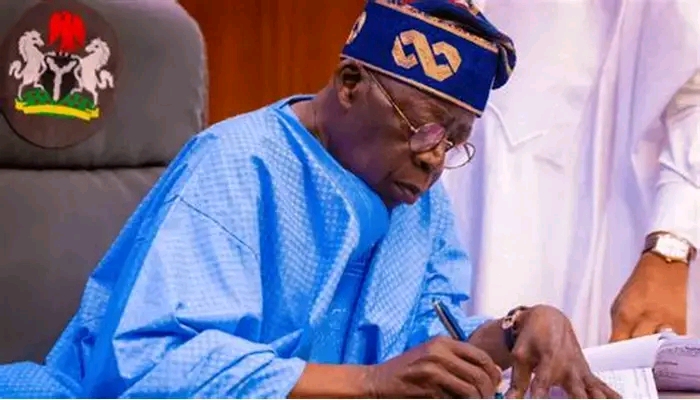
President Bola Tinubu signed an amendment to the 2025 Appropriation Act after the National Assembly extended the capital component of that budget from 30 September to 31 December 2026. The move followed an executive request that asked ministries, departments and agencies to finish funded works already under way.
The Senate and the House of Representatives passed the amendment on Tuesday. Senate Leader Opeyemi Bamidele moved the motion after an executive session. House Majority Leader Julius Ihonvbere led the debate in the lower chamber. Both houses used accelerated readings.
The N54.99 trillion 2025 Appropriation Act originally ran to 31 December 2025. Lawmakers later pushed the capital window to 31 March 2026, then to 30 June, then to 30 September. Tuesday’s vote made the fourth extension.
Ihonvbere said “several factors and forces impinging on the Nigerian economy” had blocked completion within the earlier timetable. Deputy Senate President Jibrin Barau said the extra time was needed so the government would not leave projects unfinished, including those inherited from previous administrations.
The 2025 Act, signed on 28 February 2025, provided N23.96 trillion for capital spending, N14.32 trillion for debt service, N13.64 trillion for recurrent non-debt spending and N3.65 trillion for statutory transfers.
Tinubu had told a joint session in December 2025 that overlapping budgets would end. “We’re terminating the habit of running three budgets in one flow. By March 31, 2026, all capital liabilities from previous years will be fully funded and closed. From April, Nigeria will operate on a single budget,” he said then.
The latest amendment kept 2025 capital votes open through the rest of 2026 while the N68.32 trillion 2026 budget already operated. Officials said the extra quarter would let agencies process outstanding payments and complete infrastructure already appropriated and released.