



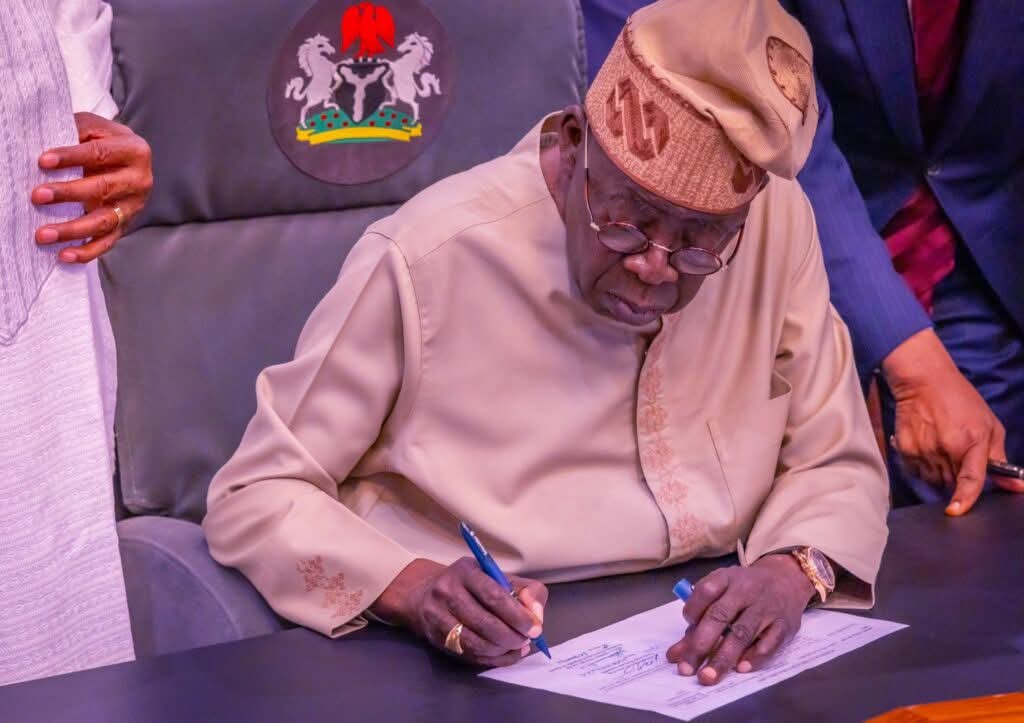
President Bola Tinubu signed the 2026 Appropriation Bill into law on Friday. The measure authorised an aggregate expenditure of ₦68.32 trillion for the fiscal year.
Special Adviser on Information and Strategy Bayo Onanuga announced the development in an official statement. He confirmed the budget took effect on April 1 and aligned with the Renewed Hope Agenda.
The approved budget earmarked ₦32.2 trillion for capital expenditure. This figure represented nearly 50 per cent of the total package. It also allocated ₦15.4 trillion to recurrent spending, ₦15.8 trillion to debt service and ₦4.799 trillion to statutory transfers.
Sectoral highlights included ₦5.41 trillion for defence and security, ₦3.56 trillion for infrastructure, ₦3.52 trillion for education and ₦2.48 trillion for health. The National Assembly had earlier expanded the original ₦58.47 trillion proposal submitted by President Bola Tinubu in December 2025.
President Bola Tinubu also signed the Appropriation (Repeal and Enactment) Amendment Bill 2026. The legislation extended the implementation period of the 2025 capital budget from March 31 to June 30. Bayo Onanuga explained the reason.
He stated the extension would ensure full utilisation of funds for advanced infrastructure projects and allow ministries, departments and agencies to complete ongoing works without interruption.
President Bola Tinubu had earlier described the budget process as a defining moment in Nigeria’s reform journey. He told a joint session of the National Assembly that the path of reform led to lasting stability and shared prosperity. The presidency later praised the National Assembly for its diligence and cooperation.
It reaffirmed the need for continued collaboration between the executive and legislative arms to advance national development objectives. President Bola Tinubu directed all agencies to implement the budget with discipline, transparency and value for money.