



 A 10-day truce appeared to be holding in Lebanon early Friday, promising a pause in fighting between Israel and the Hezbollah militant group and possibly clearing one major obstacle to a deal between Iran and the United States and Israel to end weeks of devastating war.
But it remained unclear whether Israel would completely stop strikes on Hezbollah, and whether the militant group would recognize a deal it did not play a role in negotiating and which will leave Israeli troops occupying a stretch of southern Lebanon.
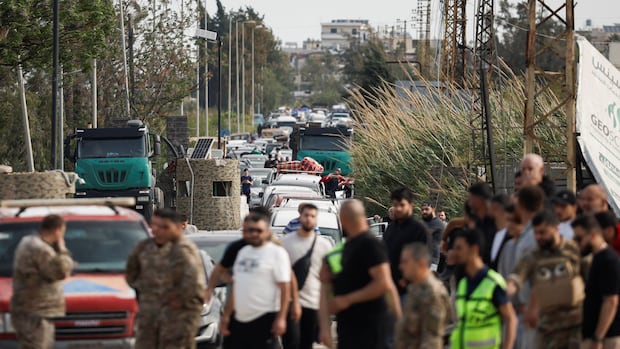
Barrages of gunshots rang out across Beirut as residents fired into the air just after midnight to celebrate the beginning of the truce, and displaced families began moving toward southern Lebanon and Beirut’s southern suburbs despite warnings by officials not to attempt to return to their homes until it became clear whether the ceasefire would hold.
U.S. President Donald Trump heralded the deal a “historic day for Lebanon,” even as he expressed confidence that the war with Iran would soon end in a Las Vegas speech.
“I will say the war in Iran is going along swimmingly,” Trump said. “It should be ending pretty soon.”
Relief at a ceasefire beginning in Lebanon was tempered by the destruction that many encountered upon returning to their homes.
In the southern village of Jibsheet, a trickle of residents returned to flattened apartment blocks and streets littered with chunks of concrete, twisted aluminum shutters and dangling electrical wires.
Scenes of destruction
“I feel free being back,” 23-year-old Zainab Fahas said. “But look they destroyed everything: the square, the houses, the shops, everything.”
In the southern Beirut suburb of Haret Hreik, Ahmad Lahham, 48, waved the yellow Hezbollah flag. He stood on a mountain of rubble that was his apartment building and also housed a branch of Hezbollah’s financial arm, Al-Qard Al-Hassan.
Iran’s pressure in its talks with the U.S. brought the truce, he said, condemning Lebanon’s direct talks with Israel.
“Only the Iranians stood with us, no one else,” he said, calling Lebanon’s leaders “the leadership of shame.”

An end to Israel’s war with Hezbollah was a key demand of Iranian negotiators, who previously accused Israel of breaking the current ceasefire deal with strikes on Lebanon. Israel said that deal did not cover Lebanon.
Pakistan’s army chief met Thursday with Iran’s parliament speaker as part of international efforts to press for an extension of the ceasefire.
While oil prices fell on hopes of a deal, the head of the International Energy Agency warned that energy shocks could get worse if the Strait of Hormuz doesn’t reopen soon. Iran closed the crucial waterway, through which a fifth of the world’s oil normally passes, shortly after the war began. Europe has “maybe six weeks or so” of jet fuel left and broader economic consequences will grow the longer the strait is closed, IEA Executive Director Fatih Birol told The Associated Press on Thursday.
The leaders of France and the U.K. will gather dozens of countries— but not the United States —on Friday to push forward plans to reopen the strait.
WATCH | Trump announces Lebanon ceasefire:

U.S. President Donald Trump announced a ceasefire has been agreed to by Israel and Lebanon, and that the truce includes Hezbollah. Israel’s Prime Minister Benjamin Netanyahu said Israeli forces already in Lebanon will not withdraw.
The fighting has killed at least 3,000 people in Iran, more than 2,100 in Lebanon, 23 in Israel and more than a dozen in Gulf Arab states. Thirteen U.S. service members have also been killed.
Israel to keep troops in Lebanon
Earlier, Israeli Prime Minister Benjamin Netanyahu said he agreed to the ceasefire “to advance” peace efforts with Lebanon, but he said Israeli troops would not withdraw.
Israeli forces have engaged in fierce battles with Hezbollah in the border area as they pushed into southern Lebanon to create what officials have called a “security zone.” Netanyahu, in his video address, said it will extend 10 kilometres into Lebanon.
“That is where we are, and we are not leaving,” he said.
Hezbollah has said that Lebanese people have “the right to resist” Israeli occupation of their land and that their actions “will be determined based on how developments unfold.”