



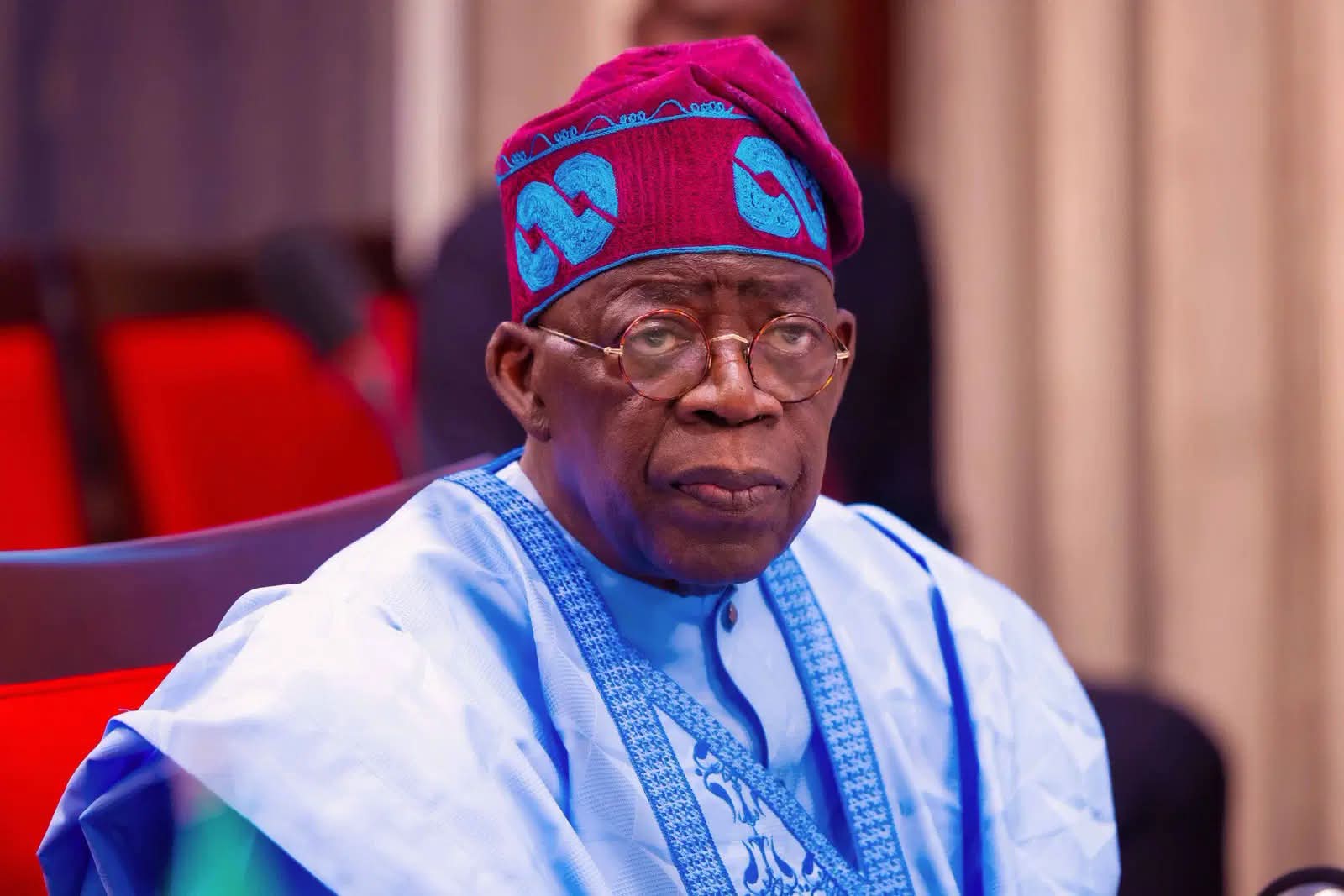
Senior Special Assistant to the President on Planning and Research Nnadubem Moghalu stated on Monday that President Bola Tinubu had not dictated specific provisions for the proposed National Policing Bill.
Moghalu spoke during an interview on Channels Television. He serves as secretary of the Presidential Working Group on the National Policing Bill.
He explained that the draft legislation was being developed through a broader consultative process. This process involved experts, state governments and the public.
Moghalu said the President’s interest was to have an implementable policing framework rather than dictate the details of the proposed law.
When asked whether the President had revealed the specifics, he said: “No. The President has not dictated to us specifics of what will go into the National Policing Bill. What we have now is a desire to build something that will be implementable and will work for all Nigerians.”
The clarification came amid concerns over the executive’s role in the ongoing process to establish state police. This followed the passage of the constitutional amendment that provided for a dual policing architecture.
Moghalu stated that the constitutional amendment only provided the foundation for federal and state policing. Meanwhile, the National Policing Bill would supply the operational framework needed to make the system work.
He said: “The constitutional amendment that has passed in the National Assembly provides the framework architecture, the bare bones, as it were, and the National Policing Bill will put some flesh on those bones.”
According to him, the working group would determine what must be done to make the new policing structure operational. This included issues of funding, recruitment, training, certification, command, jurisdiction and cooperation between federal and state police.
He added that the process would also address possible conflicts arising from the operation of the two policing structures.
Moghalu gave the example of a criminal fleeing from one state to another. He said the law must clearly establish what happens when a suspect crosses a state boundary.
He said: “Imagine, for example, that a criminal is being chased from Anambra State, who has committed a crime in Anambra State, and he runs across the border into Enugu or into Kogi. In this dual system, what happens in that moment? Whatever answer you think is the correct answer in this situation, that answer has to be settled as a matter of law.”
To broaden participation, Moghalu said the government had opened a national call for memoranda on the proposed legislation.
He noted that 17 thematic areas had been identified. These covered national minimum policing standards, state readiness and certification, federal and state policing architecture, jurisdiction, inspection and compliance, Police Service Commission architecture and the establishment of state police services.
The process would also involve a 26-member Policy Advisory Committee. The committee comprised Nigerians drawn from the judiciary, academia, police and security agencies, as well as state Attorneys-General.
Moghalu said the committee, chaired by retired Court of Appeal Justice Muhammad Abba Leman, would review the drafts produced by the working group before the final document was submitted to the President.
While he urged Nigerians and relevant institutions to participate in the process, he said policing affected every citizen.
“If you are a Nigerian living in Nigeria today, it doesn’t matter whether you are wealthy, it doesn’t matter whether you are poor, it doesn’t matter whether you are educated or uneducated. At some point in your life, you will interact with the police,” he said.