



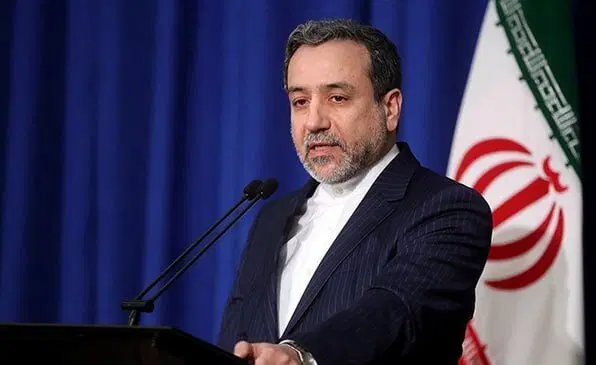
Iran has warned South Korea that sending military personnel or assets to the Strait of Hormuz would be viewed as direct support for its opponents, raising the stakes as Seoul weighs how far it should go in efforts to protect navigation through the strategic waterway.
The warning was issued Monday by Iranian Foreign Ministry spokesperson Esmaeil Baqaei, who published a message in Korean on X in an apparent attempt to communicate Tehran’s position directly to the South Korean public and government.
Baqaei began by highlighting the longstanding relationship between the two countries, noting that diplomatic ties have existed for more than six decades.
“Relations between Iran and South Korea date back more than 64 years and have always been based on mutual respect,” he said, adding that Tehran “greatly values its friendly relations” with Seoul.
But Iran’s diplomatic message contained a clear warning. Baqaei said any foreign military presence or operational participation in the Persian Gulf and Strait of Hormuz would amount to support for what Tehran considers aggression against Iran.
He warned that such involvement “would amount to direct support for the aggressor and would have serious consequences.”
The statement comes days after South Korea confirmed that it was examining ways to contribute to security around the Strait of Hormuz. Seoul has not committed to deploying forces, but officials have acknowledged that both military and nonmilitary options are being reviewed.
Possible measures reportedly include a maritime patrol aircraft, a logistics support vessel and a mine-clearing unit. Any military deployment would also face legal and political considerations in South Korea.
Seoul’s position is complicated by its heavy dependence on energy supplies moving through the region. The Strait of Hormuz is one of the world’s most strategically important maritime chokepoints, making uninterrupted navigation a major concern for countries dependent on Middle Eastern oil.
South Korea’s Foreign Ministry said it is maintaining communication with the international community and relevant countries as it works toward restoring regional stability and ensuring the free movement of vessels, including South Korean ships, through the Strait.
Iran, however, is making clear that it does not regard a South Korean military contribution as a neutral maritime-security measure. Tehran has framed participation in operations around Hormuz as involvement in the conflict itself.
The warning places Seoul in a delicate position as it balances its security relationship with Washington, its energy interests and its longstanding diplomatic ties with Tehran.
For now, South Korea has stopped short of announcing a deployment. But with Iran openly threatening “serious consequences,” any decision by Seoul to place military assets around Hormuz could carry consequences far beyond maritime security.