



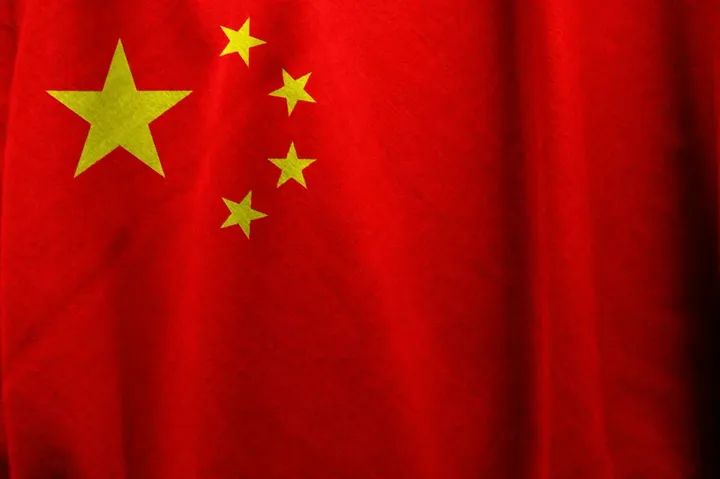
China has doubled down on its opposition to Taiwan independence, declaring that the island remains an inseparable part of China while portraying United Nations General Assembly Resolution 2758 as a key foundation of its one-China position.
The renewed stance places the decades-old Taiwan dispute back in focus, particularly as Taipei continues seeking greater participation in international organisations and Beijing presses governments to follow its interpretation of the one-China principle.
Resolution 2758 was adopted by the UN General Assembly in 1971. The measure restored the rights of the People’s Republic of China at the United Nations, recognised its government as the legitimate representative of China and removed the representatives of Chiang Kai-shek from China’s seat.
Beijing argues that the resolution went beyond the issue of UN representation. China says it also established the international framework recognising Taiwan as part of China.
In an official statement issued in August 2026, Chinese Foreign Ministry spokesperson Guo Jiakun said China’s position on Taiwan’s participation in international organisations remained unchanged.
“It must be handled in accordance with the one-China principle,” Guo said, describing that principle as a basic norm in international relations confirmed by Resolution 2758 and a prevailing international consensus.
China’s Foreign Ministry has further stated that there is only one China and that Taiwan is an “inalienable part” of Chinese territory. Beijing says the People’s Republic of China is the sole legal government representing the whole of China and rejects any arrangement suggesting separate Chinese representation.
Taiwan strongly disputes that interpretation. Its Foreign Ministry has repeatedly argued that Resolution 2758 does not mention Taiwan and does not determine Taiwan’s political or sovereign status.
In its April 2026 response to remarks by Chinese Foreign Minister Wang Yi, Taiwan’s Foreign Ministry said the resolution dealt with the question of China’s representation at the United Nations and “did not determine that Taiwan was part of the People’s Republic of China.”
Taipei has also maintained that neither Taiwan nor the People’s Republic of China is subordinate to the other and that Taiwan’s democratically elected government should represent its people internationally.
The opposing interpretations underscore the continuing diplomatic and political sensitivity surrounding Taiwan. While Beijing insists that its sovereignty claim is settled and that independence efforts must be rejected, Taipei continues to challenge China’s interpretation of Resolution 2758.
With both sides maintaining fundamentally different positions, the dispute remains one of the most consequential flashpoints in East Asian geopolitics.