



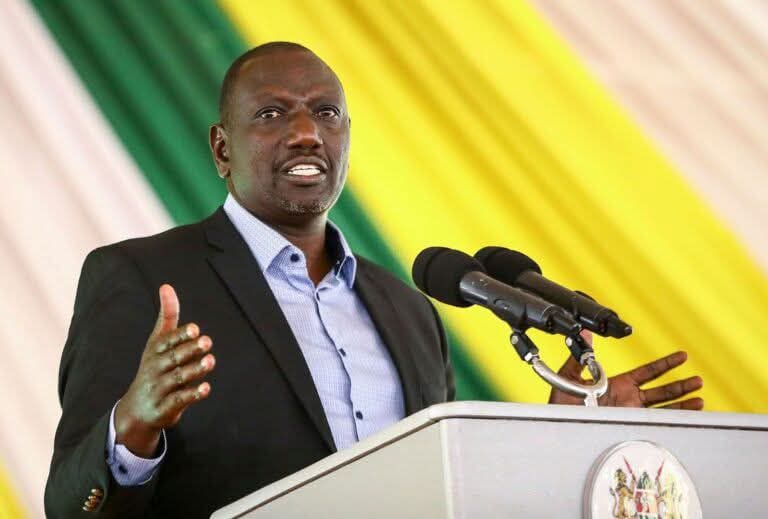
Kenyan President William Ruto issued an apology to Nigerians after his comments on English accents sparked widespread backlash. He clarified that his words were misquoted and taken out of context.
President William Ruto made the initial remarks while addressing Kenyans living in Italy on April 20. He praised Kenyan education and English proficiency. He stated that Kenyans speak some of the best English in the world.
He added that listeners sometimes needed a translator to understand Nigerians speaking English. The comment drew laughter from the audience but triggered strong criticism on social media from Nigerians who viewed it as disrespectful.
The backlash spread rapidly across platforms. Many Nigerians accused President William Ruto of mocking their accent and undermining a fellow African nation. The controversy strained diplomatic sentiments between the two countries.
President William Ruto addressed the issue during an event in Nairobi on April 28. He explained that the remarks came from a private conversation that was leaked. He insisted he spoke about how Africans across the continent command strong English skills. He added that different accents should not be seen as a lack of proficiency.
In his apology, President William Ruto said he was misunderstood. He urged that his comments be viewed as a light-hearted comparison rather than an insult. He specifically asked officials to pass his regards to President Bola Ahmed Tinubu, whom he called his friend, and to the great people of Nigeria, whom he described as his in-laws. He requested that the message be delivered in good English.
President William Ruto further stated that in some countries like Nigeria, if one does not speak excellent English like the one spoken in Kenya, a translator might be needed to understand the excellent English of Nigeria. He maintained that the point highlighted Africa’s overall linguistic strength.
The clarification aimed to calm tensions. Nigerian officials and citizens reacted with mixed responses, but many accepted the apology as a step toward repairing relations. The incident underscored sensitivities around national pride and cross-border humour in Africa.