



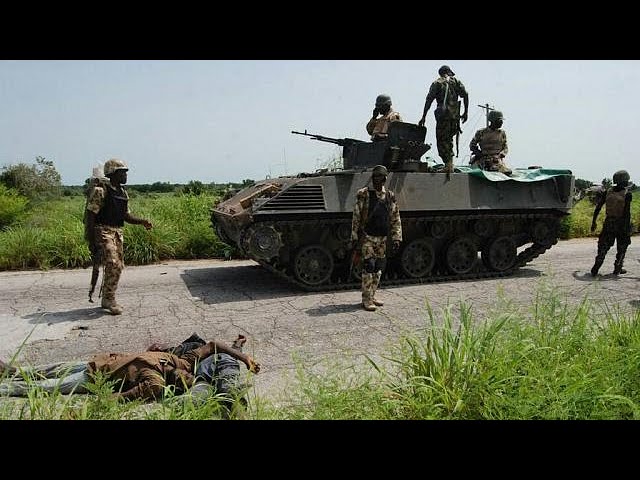
Nigerian troops repelled coordinated terrorist attacks on Pulka and Mandaragirau in Borno State late on February 14, 2026. The assaults targeted defensive positions in both locations. Troops from the Joint Task Force (North East) Operation HADIN KAI demonstrated resilience and inflicted heavy casualties on the attackers.
In Mandaragirau, ISWAP terrorists launched a multi-pronged assault using gun trucks and motorcycles. Troops anticipated the move and positioned combat teams to engage the insurgents decisively. The fierce exchange prevented any breach of the defensive location. However, some gallant soldiers and Civilian Joint Task Force (CJTF) members paid the supreme price during the defense. A few soldiers sustained injuries, and the Air Component of Operation HADIN KAI along with Nigerian Army Aviation platforms evacuated them promptly.
In Pulka, a large group of suspected Boko Haram/ISWAP terrorists advanced from the Sambisa Forest axis and attacked Sector 1 positions. Troops responded with intense firefight and contained the assault effectively. No soldiers died in Pulka. Intelligence later confirmed severe losses on the terrorist side, including the death of senior ISWAP commander Abou Aisha, who suffered a critical gunshot wound to the neck.
Lieutenant Colonel Sani Uba, Media Information Officer at the Headquarters Joint Task Force (North East), issued a statement on the incidents. He stated that troops held their ground through battle discipline, firepower, tactical foresight, and resolve. The operations reaffirmed Operation HADIN KAI’s dominance in the theatre. Uba described the terrorists’ attempts as desperate efforts to overrun positions, but the attacks failed.
The military recognized the sacrifice of the fallen soldiers and CJTF members in Mandaragirau. Their actions embodied courage and commitment to defending Nigeria. Troops transitioned from these defensive successes into further operations aimed at disrupting terrorist logistics and networks across the region.