



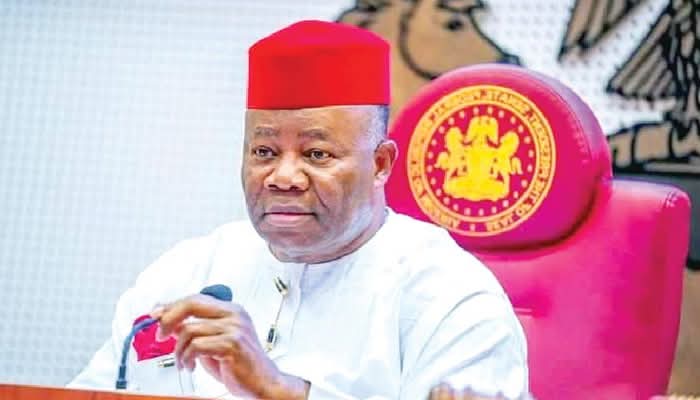
The Nigerian Senate amended its standing rules on Tuesday and introduced stricter eligibility criteria for leadership positions. Senate President Godswill Akpabio presided over the session that adopted the changes.
Lawmakers held a closed-door session that lasted about three hours before they returned to plenary. They then adopted amendments to Order 2 (3), (4), and (5) through a voice vote. The new rules require senators to have served at least two consecutive terms immediately before they seek election as Senate President, Deputy Senate President, or other principal officers.
Senator Adams Oshiomhole, who represents Edo North, opposed the amendment and became the only dissenting voice. Oshiomhole attempted to raise a point of order after the voice vote. Senate President Godswill Akpabio overruled him.
Oshiomhole protested that the amendment did not reflect what senators agreed upon during the closed door session. Tension rose in the chamber as the two clashed openly. Reports indicated the disagreement centered on implications for the 2027 Senate presidency race.
The changes bar first-term senators and many returning lawmakers who lack the required consecutive service from contesting top positions. Previously any ranking senator with at least one term qualified. The amendment effectively demands a minimum of eight uninterrupted years in the chamber for eligibility.
Observers noted that the rule change affects senators such as Adams Oshiomhole, who serves his first term in the current assembly. Similar restrictions apply to other potential aspirants, including some former governors eyeing Senate leadership in 2027.
Senate President Godswill Akpabio announced the amendments after the majority supported them. The development came barely a year before the next National Assembly inauguration. No further comments emerged from either Akpabio or Oshiomhole immediately after the session.