



The National Assembly has outlined major reforms introduced in the Electoral Act 2026 to include mandatory electronic transmission of results, creation of a dedicated fund for the Independent National Electoral Commission (INEC), and creation of a digital membership register by all political parties
Leader of the Senate, Opeyemi Bamidele, who disclosed this in a statement released by the Directorate of Media and Public Affairs in his office, said the new law comes with compulsory use of the Bimodal Voter Accreditation System (BVAS) and would facilitate stricter regulations for political parties.
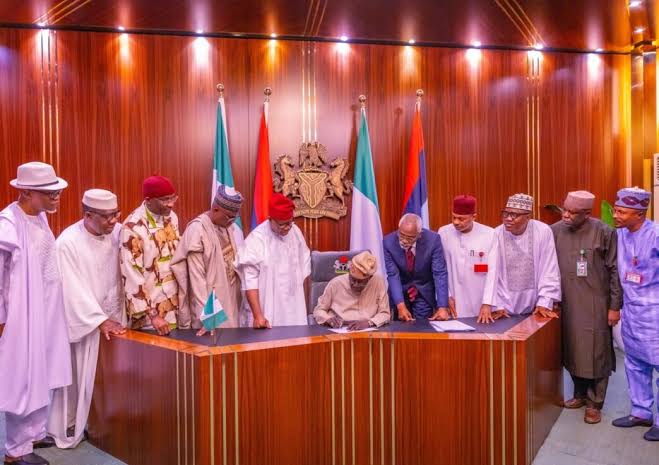
Last week, President Bola Tinubu signed the bill into law within 24 hours of its passage by the National Assembly, completing what lawmakers described as a two-year reform process.
Bamidele, in an explainer, pointed out that the new regime reviewed upward the election spending limit under Section 92(1-8) of the Electoral Act, raising the spending threshold for presidential poll from N5 billion to N10 billion.
He said it also raised the spending threshold for governorship poll from N1 billion to N3 billion; from N100 million to ₦500 million for the Senate; from N70 million to N250 million for the House of Representatives; from N30 million to N100 million for the House of Assembly; from N30 million to N60 million for Area Council and from N5 million to N10 million for the councillorship poll.
Under Section 125(1-2), the Senate Leader explained how the new legislation stiffened measures against vote buying, impersonation, and result manipulation, recommending a two-year imprisonment for such offences or a fine ranging between N500,000 and N2 million or both upon conviction. The reforms contained in the law are encapsulated as follows:
Financial Autonomy for INEC
Bamidele explained that Section 3 of the Act establishes a dedicated fund for INEC to guarantee its financial autonomy, operational stability and administrative continuity. The law also mandates the release of election funds at least six months before a general election and expands INEC’s authority to review result declarations made under duress or procedural violations.
Technology-Driven Electoral Process
Under Section 47, the Act makes it mandatory for presiding officers to use BVAS or any other technological device prescribed by INEC for voter accreditation.
Section 60(3) provides for the compulsory electronic transmission of results to the INEC Result Viewing Portal (IReV), while Section 60(6) prescribes a six-month jail term or a fine of ₦500,000 — or both — for any presiding officer who wilfully frustrates the electronic transmission of results.
The Senate Leader clarified that while IReV enhances transparency, it is not a collation platform. He added that the law permits the use of Form EC8A where electronic transmission fails due to communication challenges.
Sanctions and Administrative Provisions
Section 74(1) mandates Resident Electoral Commissioners (RECs) to release certified true copies of documents within 24 hours of payment, with failure attracting a minimum two-year imprisonment without the option of fine.
Section 72(2) provides that a certified true copy of a court order is sufficient for swearing in a candidate declared winner by a court if INEC fails to issue a certificate of return.
Under Section 125(1-2), the Act prescribes a two-year jail term or fines ranging between ₦500,000 and ₦2 million — or both — for offences such as vote buying, impersonation and result manipulation.
Reforms to Party Primaries
The Act eliminates indirect primaries and retains only direct and consensus primaries under Section 84 (1-2).
Section 77 (1-7) requires political parties to maintain a digital register of members, issue membership cards, and submit the register to INEC at least 21 days before conducting primaries, congresses or conventions. Parties that fail to comply will be barred from fielding candidates in the affected election.
Revised Campaign Spending Limits
Section 92(1-8) raises campaign spending limits as follows:
Presidential: ₦10 billion (from ₦5 billion)
Governorship: ₦3 billion (from ₦1 billion)
Senate: ₦500 million
House of Representatives: ₦250 million
House of Assembly: ₦100 million
Area Council: ₦60 million
Councillorship: ₦10 million
The Act also imposes a ₦10 million fine on any political party that fails to submit accurate audited returns within the stipulated period.
Inclusion Measures
The legislation introduces additional safeguards, including provisions under Section 49 for gender-separated queues in areas where cultural practices require it, and Section 54, which establishes support mechanisms for persons with visual impairment.
Bamidele described the Electoral Act 2026 as a consolidation of Nigeria’s electoral governance framework, aimed at strengthening INEC’s independence, enhancing transparency, improving technological integration and reinforcing accountability ahead of the 2027 general elections.